的
de
also pronounced dì or di in poetry and songs
- Particleof; ~'s (possessive particle); (used after an attribute when it modifies a noun)
1.这是我的书。This is my book.
2.我姐姐的同事也来了。My sister's colleagues also came.
3.他把昨天买的书放在桌子的左边。He put the book he bought yesterday on the left side of the table.
- (used at the end of a declarative sentence for emphasis)
- (used after a noun, verb or adjective to form a nominal expression)
皮革的 one made of leather
跑堂儿的 a waiter (literally, one who runs back and forth in a restaurant)
新的 new one
dī
- Particlea taxi; a cab (abbreviation for 的士)
我昨天坐的去机场。I took a cab to the airport yesterday.
dí
- Adverbreally and truly
dì
- Bound formbull's-eye; target (bound form)
About MyCidian
MyCidian is a free, web-based Chinese-English dictionary designed for native English speakers.
MyCidian is heavily inspired by Jisho.org, my favorite Japanese dictionary website. One of my biggest priorities when designing MyCidian was convenience. I wanted looking up a word to be quick, simple, and actually useful for someone who is learning Chinese.
This project is still ongoing and will only get better. It's free and staying that way. Web only, with no app planned. Ad-free for now; if that ever changes, signing in will remove them.
Some decisions
- Recent lookups and your Study List stay in this browser.
- MyCidian never receives which words you save, only an anonymous count of star clicks. Your list won't follow you to another device. Clearing site data deletes it, and some browsers, like Safari, may delete it if you don't visit for a while. Export your Study List to keep a copy.
- Every alternate form, not a guess
- One simplified character can stand for several traditional ones — 发 is both 發 (to send) and 髮 (hair). Picking one to display would look cleaner and lose the distinction.
Where the data comes from
- CC-CEDICT
- The core dictionary.
- Make Me a Hanzi
- Stroke order, radicals and character composition.
- HSK 3.0 word lists
- Proficiency-level browsing, by HSK 3.0 level. A word the 3.0 lists leave out keeps its HSK 2.0 level.
- Example sentences
- Over 70,000 checked sentences. About 51,000 were written by Qwen3.8-27B running locally; the rest (about 20,000) are older Claude Haiku examples. They were checked by Claude Sonnet, with a native-speaker spot check (94% natural in a 50-sentence sample). A few hundred older, unchecked Haiku examples are still shown where no checked sentence exists.
- Claude Haiku
- An enrichment pass grouping senses, plus a separate one tagging archaic and literary usage.
Built by Zeb Barrett
FAQ
- Where are my saved words kept?
- In this browser, on this device. MyCidian never sees which words you save. They won't appear on your phone if you saved them on your laptop. Clearing site data deletes them, and Safari may delete them after about a week without a visit. Use Export on the Study List page to keep a copy.
- Do I need an account?
- No. Everything on MyCidian works without one, including the Study List.
Ask any questions you may have! Send advice, recommendations, or criticism as well. Nothing helps more than eyes from another angle!
Contact
- Not set up yet.
Check the FAQ first — your question may already be answered there.
Credits
MyCidian is built on several openly licensed datasets. Every one currently in use is credited below, by name, with the licence it ships under.
- CC-CEDICT
- The core dictionary — headwords, pinyin and English definitions. Source, licensed CC BY-SA 4.0.
- Make Me a Hanzi — dictionary data
- Character definitions, derived from Unihan and CJKlib. Source, licensed LGPL 3.0.
- Make Me a Hanzi — stroke-order graphics
- Stroke order animation, radicals and character decomposition, derived from the Arphic PL KaitiM GB and PL UKai fonts. Source, licensed under the Arphic Public License.
- hanziDB.csv
- Character frequency ranking. Source, licensed MIT.
- HSK 3.0 word lists
- Proficiency-level browsing, compiled from the public HSK 3.0 standard by two open-source projects: complete-hsk-vocabulary and hsk30, both licensed MIT.
- wordfreq
- Word frequency ranking, used to put the commoner word first when several entries share a meaning. Compiled by Robyn Speer at Luminoso (version 3.1.1). Source, licensed CC BY-SA 4.0. MyCidian has changed the data: the frequencies are converted to a rank and matched to CC-CEDICT headwords.
- The sources behind wordfreq's Chinese list
- Wikipedia; OPUS OpenSubtitles 2018, from the OpenSubtitles project; SUBTLEX-CH, freely available data created by Marc Brysbaert et al. (Cai & Brysbaert, 2010); NewsCrawl 2014 and GlobalVoices news text; Google Books Ngrams 2012; web text from OSCAR; Twitter; and the word list distributed with the Jieba word segmenter.
See About for how MyCidian is built, or ask a question if something here needs a correction.
Practice sheets
Blank grids for practicing Chinese character strokes by hand — print a sheet and write till your hand falls off
田字格 (tián zì gé)
Quadrant guides for proportion. The standard.
-
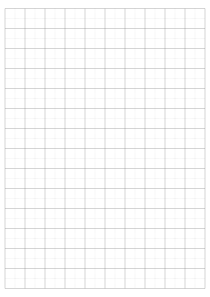
20 mm boxes — largest
田字格 sheet, 20 mm boxes (PDF) -
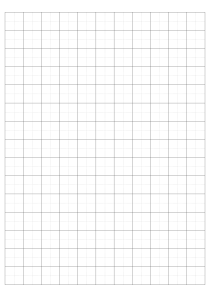
18 mm boxes
田字格 sheet, 18 mm boxes (PDF) -
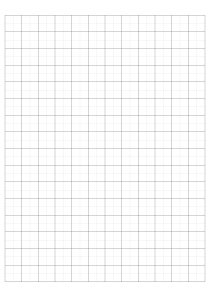
17 mm boxes — most per page
田字格 sheet, 17 mm boxes (PDF)
米字格 (mǐ zì gé)
Adds diagonals, for placing slanted strokes.
-
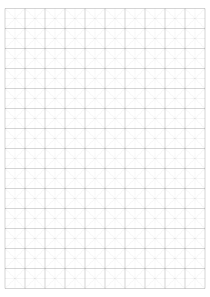
20 mm boxes — largest
米字格 sheet, 20 mm boxes (PDF) -
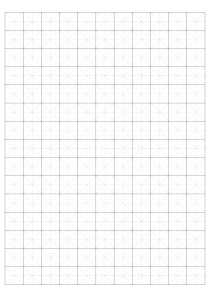
18 mm boxes
米字格 sheet, 18 mm boxes (PDF) -
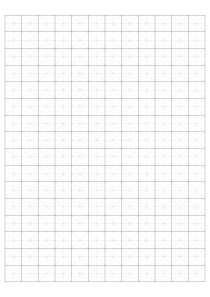
17 mm boxes — most per page
米字格 sheet, 17 mm boxes (PDF)
All sheets are A4. Printing on Letter paper? Select "Fit to page" in your print dialog so the grid isn't cropped.
Study List
Saved on this device only. Clearing site data removes it.
No saved words yet. Press the star beside any word to add it here.
History
Saved on this device only. Clearing site data removes it.
No lookups yet. Words you look up appear here.